Beginner Guide - Level 1
(Assemble & Test Your Gear)
So, you're ready to take on hiking...or maybe thinking about taking your very first backpacking trip. But where do you begin? Well, with Level 1 of Sponge's Beginner Guides of course! In this guide, you'll get a quick breakdown of how to assemble and test the main gear needed for your adventures.
Note: Clicking the product names or pictures on this blog will take you to Amazon product pages. Sponge receives a commission from purchases originating from these clicks.
Double Note: Sponge will NEVER link a product he does not stand behind. Also, Sponge has NEVER received free products or special treatment from companies.
The Big 3
Common among seasoned hikers is are the concepts of the "Big Three" (your pack, tent and sleeping system). These tend to be the heaviest and most-relied upon items you'll carry. They can also be the most expensive. A phrase sometimes uttered about these items is: "Buy now or cry later." It may be tempting for beginners to use "Big Three" items in their own garage (like that sleeping bag you've had stowed away since 2002) or pick up super cheap ones by thrifting or hitting online clearance sales. Sponge cautions you against this tactic. Invest in quality, lightweight gear early-on if you can afford it. Figure out what features you need based on geography and weather - then read reviews and user reviews to pinpoint the best products. Finally, check locally for used items - or target sales online (like Black Friday, Cyber Monday, etc) to get the best bang for your beginner buck.
NOTE: When selecting a hiking backpack, some extra caution should be given to correctly "sizing/fitting" your back. Outdoor enthusiast stores like REI have special equipment and trained staff to help match you to a pack that will not put extra strain your back. Whether you buy from them after this is up to you. Some of the best lightweight, frameless packs are sold exclusively online - like those from Durston (Sponge has the Kakwa 55).
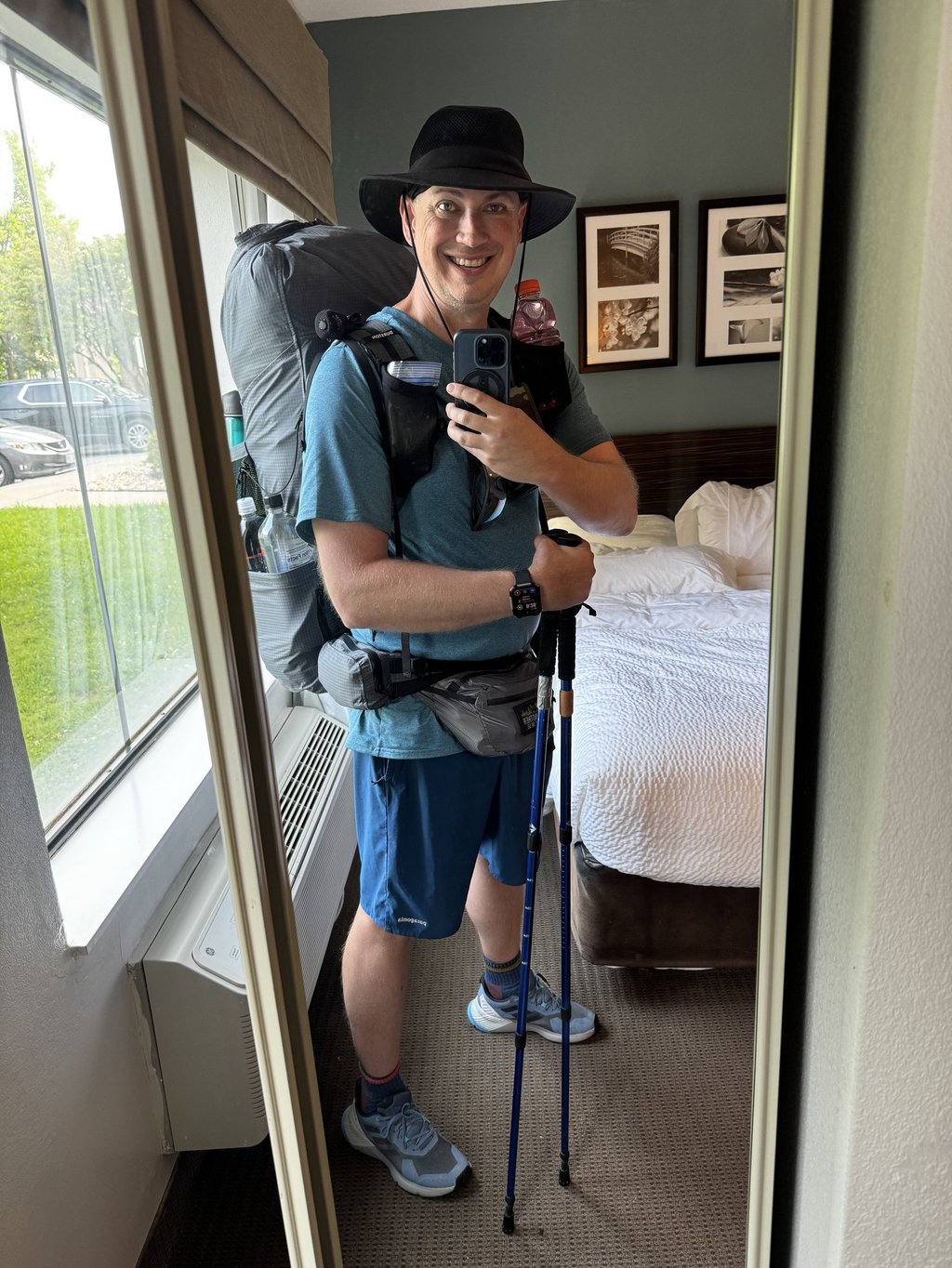
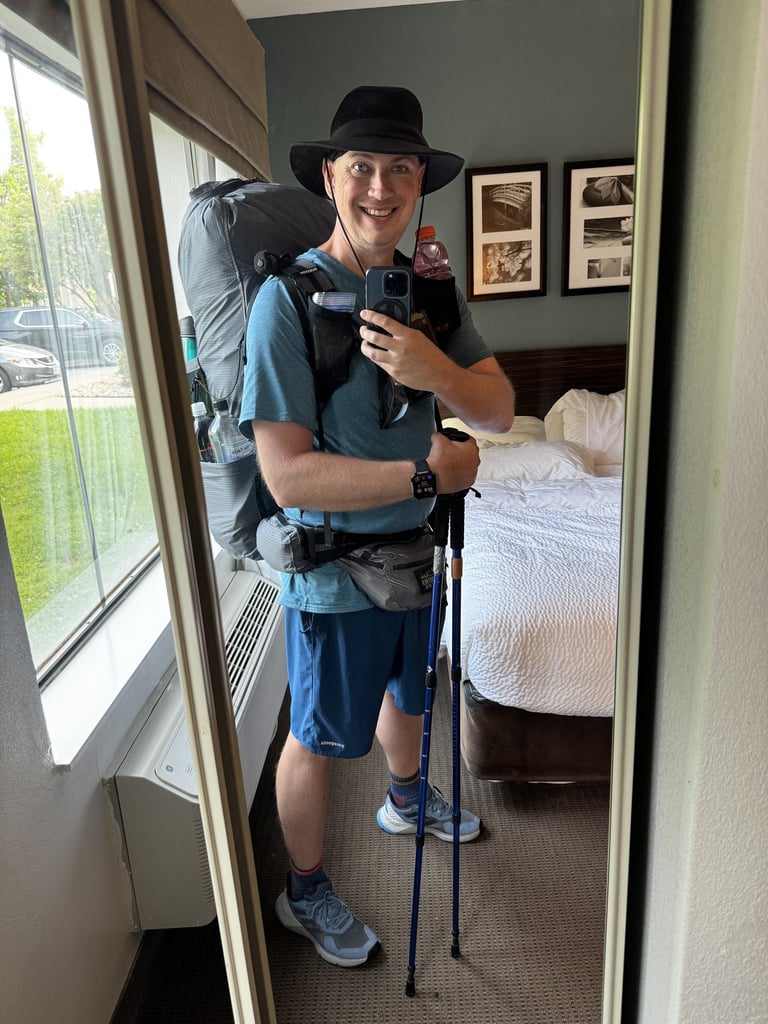
Sponge, with his gear and Kawka 55 pack - mere moments before setting out on the Appalachian Trail.
The "Rest" of Your Gear
A fter securing a quality (and hopefully lightweight) tent, sleeping system and pack, you'll want to gather the REST of your gear. This can be overwhelming - especially as what you need can vary depending on the trail, conditions and your experience. Beginners tend to overpack - they bring every conceivable item imaginable and then some duplicates ...just in case.
The better strategy? Run an online search for "backpacking/hiker pack list" and print out a few. Then consider your particular trail (including weather and conditions) and edit the list down from there. Doing a trail in a super warm climate? Eliminate items like gloves, a 4-season sleeping bag and a puffer jacket. Tackling a heavily wooded trail? No need for sunglasses or extra sunscreen.
When acquiring gear beyond your "Big 3", don't be afraid to be frugal or creative. These are items you can experiment with - Sponge has found some neat gems on Amazon, at thrift stores and even dollar stores. For example, he carries his camp shoes in mesh "laundry" bags from Dollar Tree ($1.25), keeps meds in super compact "pill pockets" ($2 for 50 total) and his sunglasses are actually polarized safety glasses ($3.50) - both from Walmart.
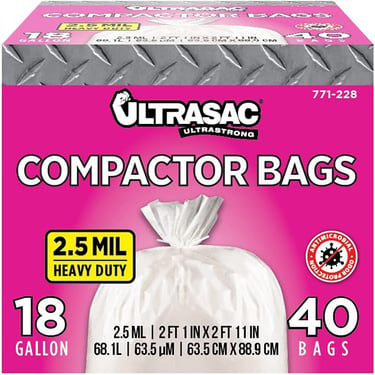
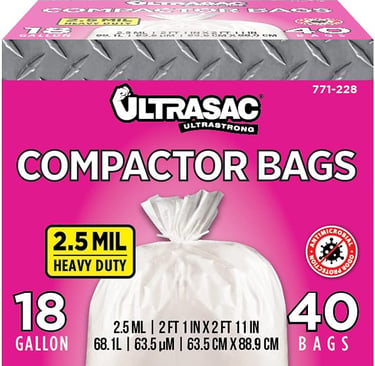
Want to keep the contents of your pack dry? Skip expensive "rain covers" and just use one of these Compactor Bags to line the inside of your pack. Total cost? 41 cents each.
Finally, it's Test-Time...
I t has been said that experience is the best teacher, and Sponge couldn't agree more. This especially holds true with figuring out your gear. From one trail to the next, you will learn what works, what doesn't and what deserves a prime table spot at your next garage sale.
But here's where all experience is NOT equal. Many beginners figure out their gear on paper, cram it all in their new pack and set out on the big trail, where things then go...well...badly.
A long trail is NOT where you want to learn that your sleeping pad is too short or your bear bag needs an extra 10 feet of paracord. Those lessons need to be learned instead over a few strategic weekends.
Yes, give your gear a good workout 2-3 weekends prior to the "big" trail. Hike a good 10+ miles each day. Test out everything. Make notes of what works well and what you NEVER use once. Over just a few weekends you'll save yourself aggravations when you start to log big miles on the even bigger hike.
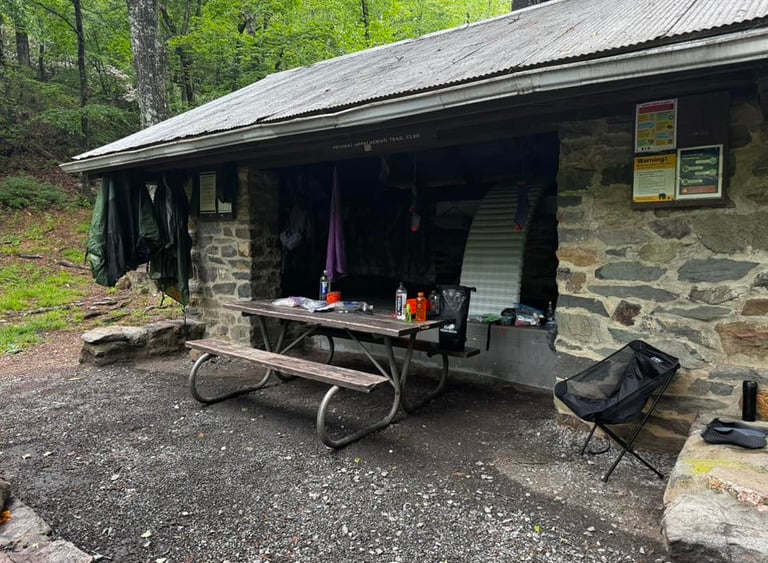
After improperly stowing a "wet" tent, Sponge had to air out the contents of his entire pack at a shelter on the Appalachian Trail. THIS was a better lesson to learn on a short weekend!