Beginner Guide - Level 2
(Weekend Warrior Mode)
Much of successful preparation for a backpacking trip or long hike is done LONG before taking a single step. If you read my Level 1 guide, you learned how to out together quality gear. If you read Sponge's Week 2 Blog, you learned how even a veteran hiker can use internet research and user groups to learn about the trail he or she hopes to traverse. But with those prep tasks done, a hiker must start to actually hike at some point. Welcome to WEEKEND WARRIOR MODE - where several strategic hiking weekends can be the next step to a successful, future trail journey.
Note: Clicking the product names or pictures on this blog will take you to Amazon product pages. Sponge receives a commission from purchases originating from these clicks.
Double Note: Sponge will NEVER link a product he does not stand behind. Also, Sponge has NEVER received free products or special treatment from companies.
Choose When & Where "Wisely"
The more you can hike before a long trail trip, the better off you'll be. But if you're like Sponge, life tends to get in the way. There's a full-time job, family commitment, and a multitude of moving parts that make carving out time a challenge. A few strategic weekends might be all you can spare. But good news - it may be all you need. However, it's critical while in Weekend Warrior Mode to choose wisely when and where you will hike.
The "When" should be as close to your big trail trip as possible, but not too close. You want to leave a week or two before your big journey to both recover from training and to fine tune your gear. This also lessens the possibility of a bad injury right before you set out on the big trail. Sponge tries to fit in two weekend trips in the calendar month prior to leaving for his big trail. For the Appalachian Trail, it was five weekend trips over two summers. For the Superior Trail, two weekend trips in May 2026.
Then there is the "Where." This may be MUCH more important, as it gives you the power to potentially mimic the trail conditions you'll experience for your "big trail" trip. Ideally you want to find weekend destinations that have trails of similar elevations profiles, terrain and camping conditions. This may require some research - Sponge suggests finding a local or state hiking group to connect with. Then ask members where you should train.
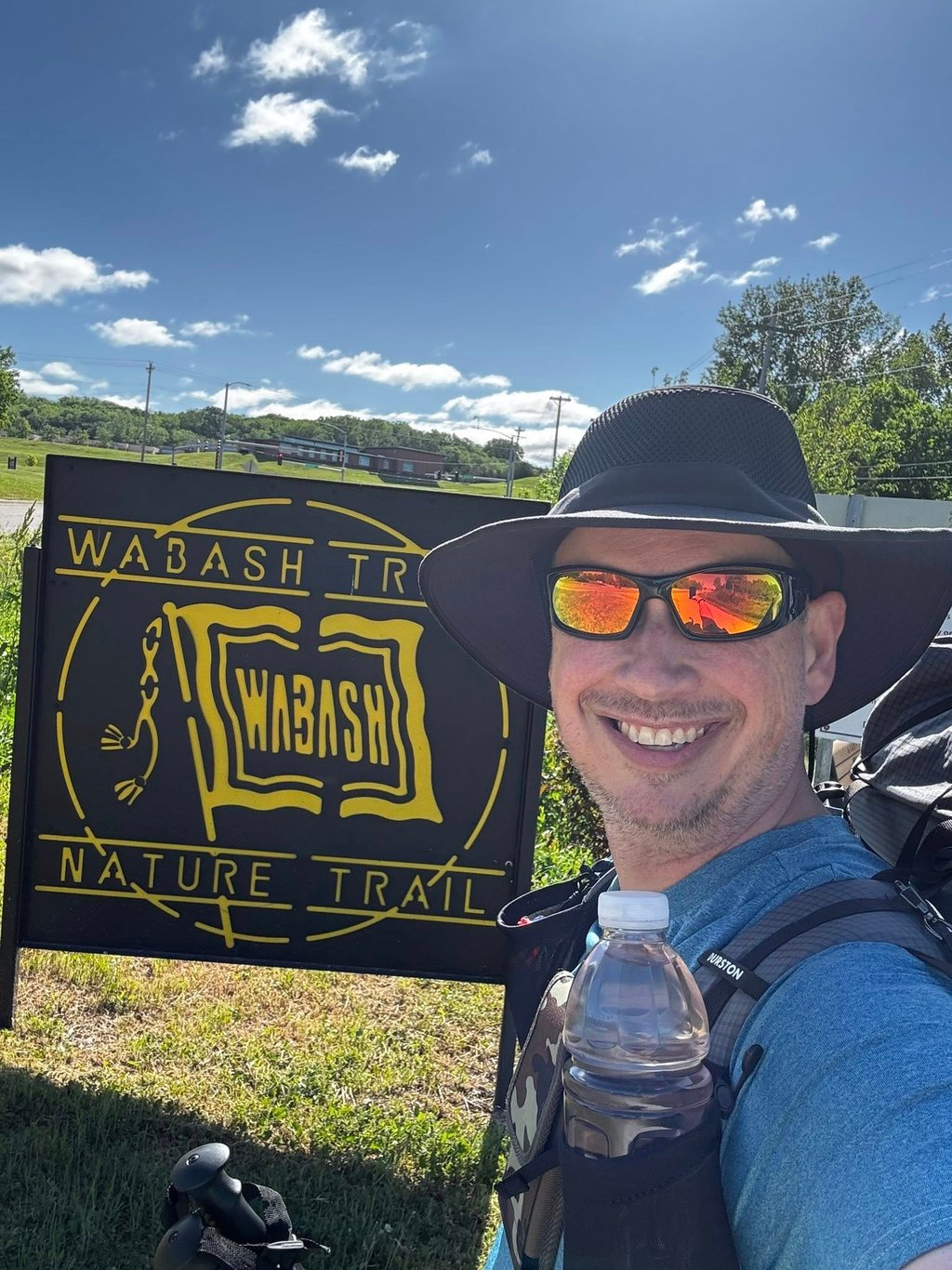
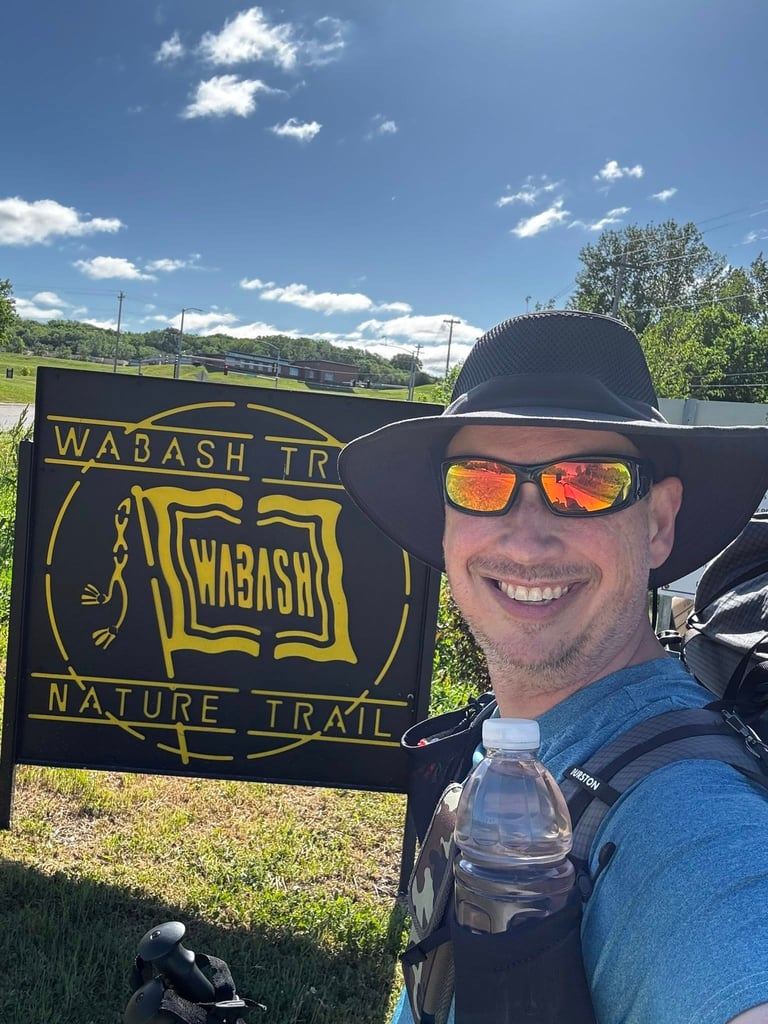
Sponge had a few 'misses' taking this approach - the Wabash Nature Trail in Iowa was one. Erected on former railroad tracks, this trail is popular with bikers. After hiking 30 miles of it, it was clear this trail was too flat to mimic the challenging ups and downs of the Appalachian Trail.
But helpful local hikers did hook Sponge up with a jackpot - Hitchcock Nature Center in Iowa. This area in the Loess Hills offers challenging elevation gains and primitive, hike-in tent sites that can be reserved in advance for $10 a night. There's a network of trails ranging in ability level from Hard (black color) to Easy (green) and Avenza map access. Water is hard to come by, available only at the lodge and regular campsite, both by the park's entrance. In many ways this area duplicates what you can find on big name summer trails - like the AT, Colorado Trail or Superior Hiking Trail.
No weekend destination will duplicate a big trail exactly, but by doing research and connecting with experienced, local hikers - you get can get close.
Sponge, starting off on the Wabash Nature Trail on one of his training runs for AT.
Gear Workout Time...
S o, you've figured out "when" and "where" your Weekend Warrior runs will be. Now it's time to put your carefully-picked gear through some actual trail conditions. Learn how your tent is pitched and how to work its rain fly. Make meals using your stove and cooking gear. Try out your apparel and various layers. Don't be afraid to put your gear through conditions you will likely experience later on - like rain, mud, bugs, hot sun or strong wind.
While you test gear - and this can be tricky - take detailed notes. Write down what is working, what is not and what should be changed. Sponge recommends using a note on your cell phone, but you could also use a simple pad and pencil if that suits your style. Doing these notes in real -time ensures you won't forget anything later. Also make notes of gear you never touched and why. If, after a few weekends, you never use it - it could be time to lose it.
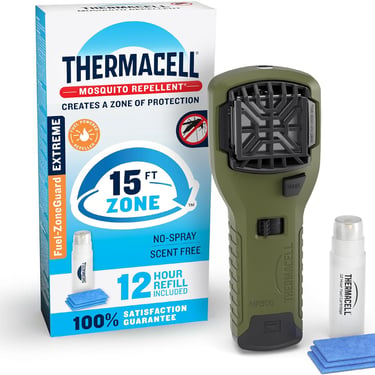
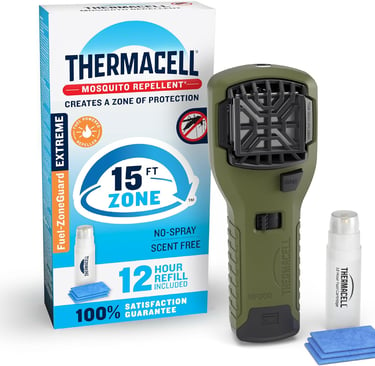
Sponge expects BAD bugs on the Superior Hiking Trail, so he'll be trying out a Thermacell Mosquito Repeller during his Weekend Warrior runs.
Twin your Future Trail
O k, you have found a local trail, reached your scheduled weekend and are now testing your gear and making notes. Surely you've done all can do to prepare for the "big" one. Not so fast, says Sponge. You still need to "twin" that ideal trail.
Twin? What do you mean? Well simply put, take all conditions that YOU personally have control over and "twin" your future trail hike with them. Planning on a 15-mile day the first day on the big trail? Do exactly 15 miles on a Saturday. Want to get up at dawn and do a spur trail to see the sun rise from a lookout? See if you can wake early and hike a mile on a Sunday. Not sure if you have enough calories in your meal plan? Try out exact meals on the weekend - and do NOT load up with colossal meals on Friday before you start.
You would be surprised how many things you have control over, even in a simple weekend. You may not control weather or trail conditions - but you can control your mileage, camping, cooking and schedule.
Which brings us to one last item under your control - communication. On big-name, long trails, your communication is often limited. Cell phones will have 1 or 2 bars of reception if you're lucky - a "SOS" icon if you're not. Short of using a GPS device, like Garmin inReach Mini 2, you will have days where no messages reach you and none reach home. While on the Appalachian Trail, Sponge learned this pretty quick. On your Weekend Warrior trips, go into airplane mode at least 24 hours straight, even if you have plenty of bars. Tell family when it will be and where you'll be, as a precaution. You need to know what it feels like. If you DO come across an area with zero bars, and your cell phone has satellite communication capability - take the time to play with it.
Sponge has an iPhone 15Pro, and newer iPhones like his can use a satellite to deliver and receive simple text messages. It's a tricky process - especially in a tent. You must point your phone in the direction of the satellite and move it when instructed. This sounds easy until you're in a tent being rained upon, deep within a forest. Trying it out in advance will give you an idea of limitations and reduce frustration later on.
Once you're done 'twinning' and trailing over weekend, it's time to move to Level 3 :)
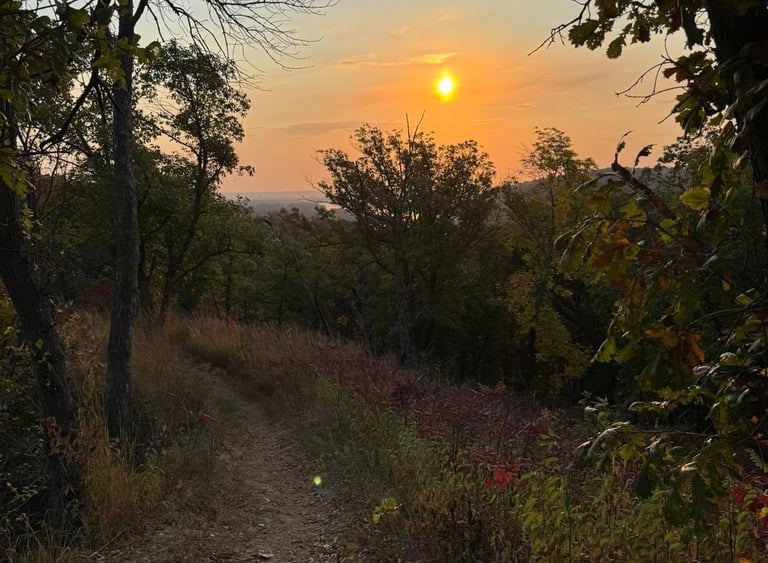
Catching a sunrise as a Weekend Warrior can help you see more on the 'Big' Trail to come...